


Thousands of traders are consistently pulling four-figure profits from the markets. But here’s the truth: while making $1,000 a day trading futures is absolutely achievable, it requires more than just luck and a trading account!
I’ve been in the trenches of the futures markets for years, and I can tell you firsthand that the difference between consistently profitable traders and those who blow up their accounts comes down to three critical factors: strategy, discipline, and proper money management. $1,000-a-day is a milestone that many traders strive for, and I’m no different, but at some point, I realized the dollar amount doesn’t matter; sticking to the plan is the only thing that does.
How Much Capital Do You Really Need to Make $1,000 a Day?

Most aspiring traders get it completely wrong. I constantly see people on forums asking if they can make $1,000 a day with a $5,000 account. The short answer? Technically possible, but practically suicidal for your trading account.
Professional traders risk between 1-2% of their capital per trade. This isn’t some arbitrary rule—it’s the difference between surviving losing streaks and blowing up your account in a week.
Let’s say you have a $50,000 trading account and you’re risking 2% per trade, which equals $1,000. To make $1,000 in profit, you’d need a 1:1 risk-reward ratio (which is actually quite poor) and a single winning trade. Sounds simple enough!
But trading isn’t about single trades—it’s about consistency over hundreds of trades. Let’s get more realistic. Assume you’re targeting a 2:1 risk-reward ratio, which means for every $500 you risk, you’re aiming to make $1,000. If you maintain a 50% win rate (which is actually quite good), you’d need to take 2-4 high-quality setups per day to consistently hit that $1,000 target.
Risk Management: The Foundation of Profitable Trading
I’m going to say something that you’ve heard before: your strategy probably isn’t the reason you’re losing money. It’s your risk management—or your complete lack of it.
Let me share a sobering statistic: approximately 90% of day traders lose money. Why? Most have the same problem—they risk too much per trade, don’t use stop losses consistently, and let their emotions override their rules during drawdowns. The traders who make it to consistent profitability? They’re obsessed with risk management!
I don’t care how confident you are in a setup; the market doesn’t care about your confidence! Your stop loss should be placed at a logical level where, if price reaches it, your trade thesis is invalidated. When price hits your stop, you exit immediately—no hoping, no praying, no “giving it more room.”
The maximum daily loss rule has saved my trading career multiple times. Set a dollar amount that, if you lose it in a single day, you immediately stop trading and walk away. Or you do what I do and tell your broker that if the daily stop hits, I can’t trade again until the next day. The maximum daily loss rule protects you from yourself during those brutal days when nothing works.
The maximum daily loss rule has saved my trading career multiple times. Set a dollar amount that, if you lose it in a single day, you immediately stop trading and walk away. Or you do what I do and tell your broker that if the daily stop hits I cant trade again until the next day. The maximum daily loss rule protects you from yourself during those brutal days when nothing works.
Here’s the truth that separates professional traders from amateurs: professional traders focus on managing risk; amateur traders focus on making money. It sounds counterintuitive, but by becoming obsessed with protecting your capital and managing your risk, the profits take care of themselves. Your job isn’t to make $1,000 today—it’s to execute your strategy perfectly, manage your risk flawlessly, and let the statistical edge play out over hundreds of trades.
Essential Tools and Technology for Futures Traders
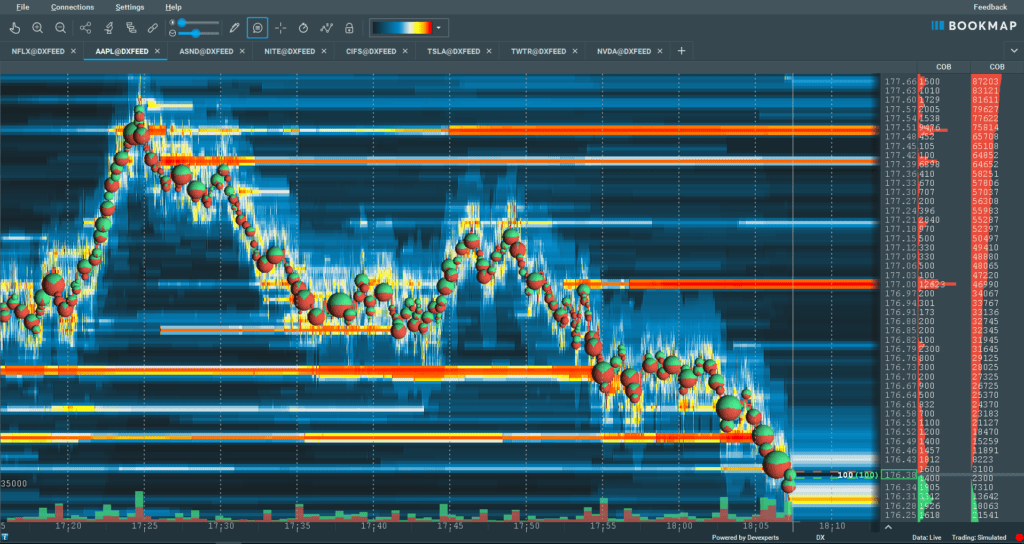
You can’t bring a knife to a gunfight, and you can’t compete in modern futures markets with inferior tools. Your technology setup is an investment in your trading business, and cutting corners here can be detrimental.
Choosing the right broker is critical. You need a futures broker that offers competitive commissions (typically $0.50-$2.50 per contract per side), excellent order execution, and reliable customer service. Poor fills can cost you thousands over time, completely negating any commission savings.
Trading platforms are your command center. Bookmap is incredibly popular among serious futures traders for its advanced charting, Heatmap capabilities, and deep market data. Jigsaw is popular among order flow scalp traders for its easy-to-use depth of market platform. TradingView has exploded in popularity with its intuitive interface, powerful charting tools, and social community features—plus it connects to multiple brokers. Each has strengths and weaknesses; I recommend trying multiple platforms in simulation before committing.
Common Mistakes That Prevent Traders from Reaching $1,000 a Day
Let me save you thousands of dollars and countless hours of frustration by highlighting the mistakes I see repeatedly.

Overleveraging is the single biggest killer of trading accounts. A trader with a $25,000 account takes 5 ES contracts because they want to “make money faster.”
One small adverse move wipes out weeks of profits. Remember: leverage is like fire—it can cook your food or burn down your house. Respect it! Trade size should always be based on risk management calculations, never on how much you want to make.
Trading without a plan is gambling, not trading. If you can’t articulate your entry criteria, exit criteria, stop loss placement, and profit target before entering a trade, you’re not ready to risk capital. Your trading plan should be specific: “I buy when price pulls back to the 21 EMA in an uptrend, RSI is oversold, and volume confirms.” Not: “I’ll buy when it looks like it’s going up.”
Ignoring risk management in pursuit of quick profits is the rookie mistake that ends careers. I see traders think, “If I just risk a little more on this one trade, I can hit my $1,000 goal.” Then they lose, and instead of accepting the loss, they risk even more trying to recover. This cascade destroys accounts. Your risk parameters exist for a reason—honor them even when it’s inconvenient!
Unrealistic expectations set you up for disappointment. Can you make $1,000 a day trading futures? Absolutely! But will you make exactly $1,000 every single day? No! Some days you’ll make $2,500. Other days you’ll lose $800. What matters is your monthly and quarterly consistency, not individual days.
Conclusion
Making $1,000 a day trading futures isn’t a fantasy—it’s a realistic goal for dedicated traders who approach the markets with the right mindset, adequate capital, and proven strategies. But let me be crystal clear: this isn’t a get-rich-quick scheme! The path to consistent profitability requires months (or even years) of education, practice, and refinement of your approach.
Start by mastering one market and one strategy before expanding your repertoire. Treat risk management as your top priority, because preserving your capital is what keeps you in the game long enough to succeed. Use a demo account until you’re consistently profitable, then start small with real money and scale up gradually as your confidence and account size grow.

Start by mastering one market and one strategy before expanding your repertoire. Treat risk management as your top priority, because preserving your capital is what keeps you in the game long enough to succeed. Use a demo account until you’re consistently profitable, then start small with real money and scale up gradually as your confidence and account size grow.
Remember, the traders who make it to the $1,000-a-day milestone share common traits: they’re disciplined, patient, continuously learning, and they treat trading like a professional business rather than a hobby or gamble. The futures markets offer incredible opportunities, but they demand respect and preparation.
Ready to start your journey to making $1,000 a day trading futures? Begin with education, practice with paper trading, and build your skills systematically. The markets will be here tomorrow—make sure you’re properly prepared before risking your hard-earned capital! Open a demo account today, commit to journaling every trade, and give yourself permission to learn without the pressure of real money. Your future profitable self will thank you.