


Starting out in trading feels overwhelming. I’ve been there. You’re staring at charts, reading about indicators, and wondering where the heck should I begin. Here’s the truth: you don’t need to master every strategy or understand every tool. You need one solid approach that works—and the discipline to stick with it.
There are many trading strategies available, but it’s important to note that other strategies exist, and learning and them is part of the fun. There’s longer-term investing, scalp trading stategies, and a million approaches inbetween. Trading can be applied across different asset classes, including the stock market, currencies, and commodities.
Many traders, especially beginners, lose money due to emotional decision-making and lack of discipline. Actually that’s probably all traders. Trading involves high risk and requires a high tolerance for volatility, so learning to manage trades is crucial for beginner traders to protect their capital and minimize losses.
Let me share a strategy that changed everything for me when I started. It’s simple, it’s proven, and it works across any market you choose to trade. Some of the best in the world use this stategy.
Introduction to Trading
Trading is the process of buying and selling financial instruments—like stocks, currencies, or commodities—with the aim of making a profit from price movements. We buy when the price rises and sell when it falls. At its core, trading is about making decisions in the financial markets, and having a clear trading strategy is what separates successful traders from those who simply gamble.
A trading strategy acts as your personal roadmap. It helps you decide when to enter and exit trades, how much to risk, and how to respond to changing market sentiment. There are several types of trading strategies that beginner traders should know about:
- Trend trading involves buying when prices are rising and selling when they’re falling, aiming to ride the momentum of the market.
- Range trading focuses on identifying price levels where an asset tends to bounce between support and resistance, buying low and selling high within that range.
- Breakout trading looks for moments when the price breaks out of a defined range, signaling a potential huge move in the market.
Choosing the right trading strategy depends on your risk tolerance and how comfortable you are with different market conditions. As you start trading, take time to learn about these strategies and experiment with what fits your personality and goals. Remember, every trader is different, and the best approach is the one you can stick with consistently.
The Power of Moving Average Crossovers in Trend Trading
A moving average crossover strategy is one of the clearest ways to follow trends without drowning in analysis. Here’s how it works:
You plot two moving averages on your chart—one fast, one slow. When the fast moving average crosses above the slow one, it signals potential upward momentum. When it crosses below, it signals potential downward momentum. This approach is a form of technical analysis, and experienced traders often use technical analysis tools, such as moving averages and chart patterns, to confirm signals and improve decision-making.
Common combinations include:
- 9 and 20 periods
- 20 and 50 periods
- 50 and 200 periods
Trend trading relies on using technical analysis to identify the direction of market momentum, making it typically suited for medium-term strategies.
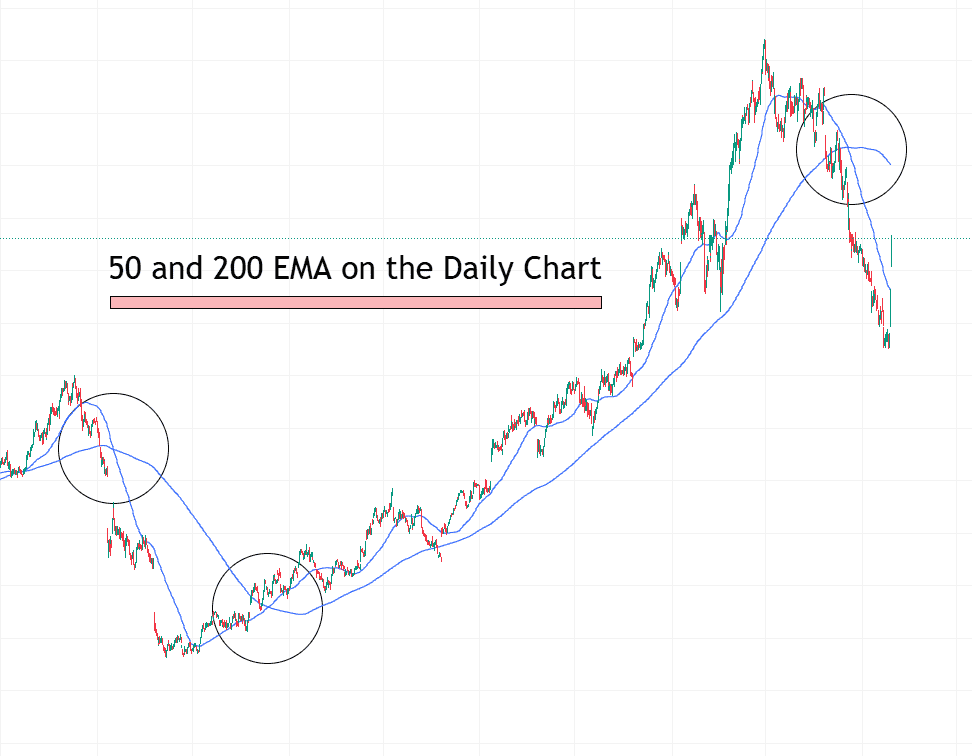
The beauty? It removes guesswork. You’re following what the market is actually doing, not what you hope it will do.
Why this matters: Markets trend. This strategy helps you catch those trends early and ride them longer than you would by gut feel alone.
Understanding Market Conditions
Before you place a single trade, it’s crucial to understand the current market conditions. The Financial Industry Regulatory Authority (FINRA) emphasizes that traders should be aware of what’s happening in the market before making any moves. Why? Because the effectiveness of your trading strategy often depends on whether the market is trending, ranging, or about to break out.
- Trend traders look for established price trends and use technical indicators like moving averages and the relative strength index (RSI) to confirm the prevailing trend. Their goal is to trade in the direction of momentum, whether the market is moving up or down.
- Range traders take a different approach. They identify clear support and resistance levels—price points where the market tends to reverse direction. By buying at support and selling at resistance, range traders aim to profit from price movements within a defined range, rather than betting on a big breakout.
- Breakout traders wait for the price to break above resistance or below support. When a price breaks through these key levels, it often signals the start of a new trend or a significant move. Breakout traders use this to their advantage, entering trades as soon as the price breaks out, hoping to catch the next wave. Learn to use market volatility to your advantage.
Understanding which market conditions you’re dealing with helps you choose the right strategy and avoid common pitfalls. Use technical indicators and pay attention to price action to stay in tune with the market, and always be ready to adapt your approach as conditions change.
Trading Orders
Knowing how to place the right trading orders is a fundamental skill for every trader. Trading orders are simply instructions you give your brokerage firm to buy or sell a financial instrument at a certain price or time. The type of order you use can make a big difference in how your trading strategy plays out.
- Market order: This is the simplest type of order. When you place a market order, you’re telling your broker to buy or sell immediately at the best available price. It’s fast and guarantees execution, but the actual price you get may differ from what you expect, especially in volatile markets.
- Limit order: With a limit order, you set the exact price at which you want to buy or sell. The trade will only execute if the market reaches your specified price or better. Limit orders give you more control and can help you lock in profits or enter trades at optimal levels, but there’s no guarantee your order will be filled if the market doesn’t reach your price.
- Stop-loss order: This is a trade management tool every beginner trader should use. A stop-loss order automatically sells your position if the price falls to a certain level, helping you limit potential losses. It’s an essential part of any trading strategy, especially when markets move quickly.
Understanding how to use these trading orders allows you to manage risk, execute your trading plan, and react to changing market conditions with confidence. As you start trading, practice using different order types so you can choose the best one for each situation and protect your capital along the way.
Risk Management: The Real Secret
Here’s what nobody tells beginners: your strategy doesn’t determine your success. Your trade management does.
According to Investopedia, a general rule is to never risk more than 2% of your available capital on any single trade
That means if you have $1,000, you risk no more than $20 per trade. In addition to the 2% rule, setting a maximum loss limit per day is a crucial risk management strategy for day traders.
Many beginner traders lose money due to emotional decision-making and lack of discipline. Risk management is crucial for beginner traders to protect their capital and minimize losses.

Successful traders have to move fast, but they don’t have to think fast because they’ve developed a trading strategy in advance, along with the discipline to stick to it.
How do you enforce this? Use stop-loss orders. Set your exit price before you enter the trade. If the market moves against you, your position closes automatically. You protect your account and live to trade another day.
Think about it: Would you rather take ten small losses you can recover from, or one devastating loss that wipes you out?
Keep a Trading Journal

This is the step most traders skip—and it costs them.
Every trade you make, write it down. What was your entry? Your exit? What was the market doing? How did you feel? This is a part of your trading day.
You’ll start to see patterns. Maybe you’re entering too early. Maybe you’re holding winners too long or cutting losers too soon. Your journal shows you the truth about your trading, not what you want to believe.
I resisted journaling at first. It felt like homework. But once I committed, my consistency improved. I stopped repeating the same mistakes.
When This Strategy Works Best
Moving average crossovers shine in trending markets. When prices are moving in a clear direction, this approach keeps you aligned with momentum.
But here’s the catch: in sideways, choppy markets, you’ll get false signals. The price crosses back and forth, triggering entries and exits that go nowhere.
In range trading, traders buy at the support level and may open long positions, aiming to profit as the price moves toward resistance. Range traders typically have a short to medium-term horizon and use technical analysis tools to identify optimal entry and exit points within the range.
What do you do? Learn to recognize when markets are ranging. Step aside. Wait for clearer conditions. Patience protects your capital more than any indicator ever will.
Start Small, Stay Consistent
You don’t need to trade large positions. You don’t need to trade every day. You need to show up, follow your rules, and build your skills one trade at a time.
Consistency comes from discipline, not motivation. Motivation fades. Discipline keeps you in the game when things get hard—and they will get hard.
Trading is tough. You’ll want to quit. You’ll want to throw your mouse across the room. Then there are these moments of clarity that make you say, “Hey, I understand.”

Those moments come faster when you have a plan, manage your risk, and track your progress.
Your Next Step
Pick a pair of moving averages. Set your risk limit. Open your journal. Start with one trade, then the next, and then the next.
You don’t need to be perfect. You won’t be. You need to be consistent. You need to follow the rules even when it’s uncomfortable. That’s how you grow.
Your trading journey starts here. Connect with other traders. Connect with me, here. Share what works. Learn from what doesn’t.
The market is waiting. Just remember that there is always another trade. Don’t be in a hurry.