

If you’re like me and have dabbled in this financial playground, you know it’s not just about forecasting the future but understanding the price action right now.
Market structure isn’t just a fancy term thrown around by traders wearing suits; it’s the deep dive your going to need to take in the financial markets.
If you’ve ever wondered why studying the nitty-gritty of market structure matters, or what the hell it actually is, stick with me, and I promise we’ll get into the dynamics of the market and what makes them tick.
Components of Market Structure
Let’s get into the components of market structure. We have the order types and execution methods, which can make or break a trader’s day.
Limit orders, market orders, they each have their quirk.
Knowing when to use each is like choosing the right tool for home repairs—you mess that up, and well, you’re in deep water.
Now, the bid-ask spread is where things can get interesting; it’s like the gap between what you think your used car is worth vs. what someone’s willing to pay.
Watch the liquidity and depth in the market. The market open is ripping all over the place, but quickly the pace starts slowing and usually by lunch time it’s like watching grass grow.
Pro tip: always keep an eye on market depth. If the pace dries up, you won’t be able to get out of trades.
The Role of Exchanges in the Futures Market
Exchanges are the bustling farmer’s market of the financial world.
Futures exchanges, like the popular CME Group, are there to provide the lifeline, ensuring transparency and efficiency.
Picture a circus ringmaster keeping everything in line—that’s what exchanges do. They’ve got rules and standards, and they’re sticklers for them too!
Exchanges act like referees in the trading ring, ensuring everything is above board and nothing shady goes down.

Challenges When Analyzing Market Structure
There are many challenges when analyzing the market. Screen time and lots of it are one of the things that will truly give you confidence in your strategy. Here are a few other things to look out for:
- Trend Direction: Are you at the beginning of a trend, at the end of a trend, or just chopping around?
- Which means, do you look for pullbacks? Is it too extended (need to wait), or do you play the fade game?
- Support and Resistance Levels: Are you at a level, coming up to a level, or in the middle of nowhere?
- Which means, you could fade it for a quick scalp, or look for absorption on the DOM, or stay out altogether.
- Volume: Are there a lot of players in the game today? Are they big players or small?
- Which means, if we’re trading with small players, we’re good to go. It’s when the big players are playing that we need to stay out.
Chart Patterns and Candlestick Patterns:
- Reading the charts and the candles will give great insight into where the price is going (In the short term).
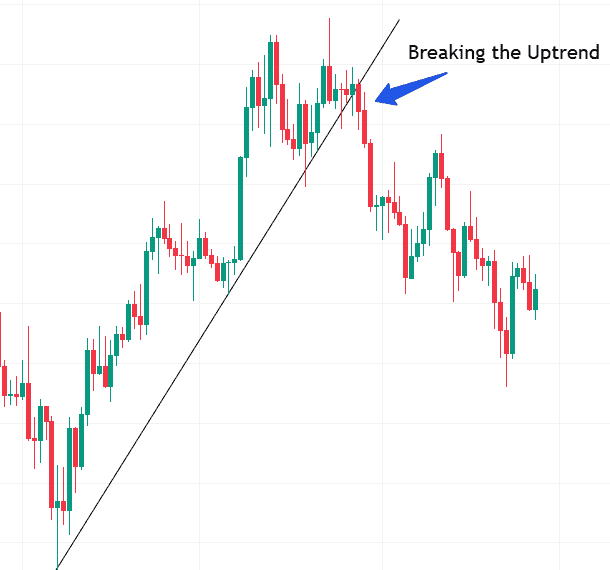
- This picture shows the end of an uptrend, then a break of that trend, and that is a break of structure.
- As far as candlestick patterns, I would only trust the engulfing candle. It marks exhaustion, a shift in sentiment, and possible reversal.
Conclusion
There you have it, folks! Understanding futures market structure isn’t just about numbers and screens—it’s about mastering the intricacies that drive the market beast.
We don’t predict the markets, we look at what the market is telling us and react quickly, and take a little piece of the pie. And we do that over and over again.
Don’t be a casual observer, be a serious professional trader; having this knowledge is like wielding a powerful torch in a dark cave.
Customize these insights to tailor them to your trading style, but always play fair and safe. Now, let’s hear from you! Share your own experiences or tips in the comments below. Let’s keep this conversation going and learn from each other!