


Day trading has captured the attention of aspiring traders around the world. I know it did me. The idea of buying and selling stocks, futures, or the dreaded crypto within a single trading day, capitalizing on small price movements, sounds exciting. But before you dive in, it’s crucial to understand what day trading really involves, the risks you’ll face, and the regulatory requirements that come with it.
This guide will walk you through everything you need to know about day trading—from the basic definition to the strategies, tools, and costs involved. Whether you’re just starting your trading journey or looking to deepen your understanding, this comprehensive resource will help you make informed decisions. I’ll try not to scare you too much.
Understanding Day Trading: The Basics
Day trading refers to the practice of buying and selling the same security or assets within a single trading day. According to FINRA (Financial Industry Regulatory Authority), day trading means “the purchasing and selling or the selling and purchasing of the same security or assets on the same day in a margin account.” It’s MUCH more than that, though.

The goal? To profit from small price movements that happen throughout the day. Day traders typically close all their positions before the market closes, avoiding the risk of overnight price changes that could lead to significant losses.
It’s important to understand that day trading is fundamentally different from traditional investing. While long-term investors buy stocks and hold them for months or years, day traders are in and out of positions within hours or even minutes. They’re not looking at a company’s long-term prospects—they’re focused on short-term price momentum and volatility.
Day Trading vs. Other Trading Styles
Intraday trading sits on a spectrum of trading approaches, each with different time horizons:
Day Trading: All positions opened and closed within the same trading day. Traders don’t hold positions overnight.
Swing Trading: Positions held for several days to weeks, capturing larger price moves over a longer period.
Position Trading: Longer-term approach where traders hold positions for weeks to months, similar to traditional investing but with more active management.
Scalping: Arguably, some people say that anything you are out of in the same day is a scalp. When I scalp, I’m in and out in seconds. With scalping, it’s possible to take dozens or even hundreds of trades in a day.
Each style requires different skills, time commitments, and risk tolerance levels. Day trading demands intense focus and the ability to make quick decisions under pressure.
The Pattern Day Trader Rule: What You Need to Know
If you’re planning to day trade regularly, you need to understand the Pattern Day Trader (PDT) rule. This FINRA regulation has significant implications for how much capital you’ll need and how you can trade.
Defining a Pattern Day Trader
According to FINRA rules, you’re considered a pattern day trader if you execute four or more day trades within five business days, provided that the number of day trades represents more than 6 percent of your total trades in your margin account for that same five-day period.
Here’s what counts as a day trade: buying and selling (or selling and buying) the same security on the same day in a margin account. Even if you close only a portion of a position on the same day you opened it, that counts as a day trade.
Your brokerage firm can also designate you as a pattern day trader if it “knows or has a reasonable basis to believe” that you’ll engage in pattern day trading. For example, if your firm provided day-trading training before you opened your account, they could designate you as a pattern day trader from the start.
The $25,000 Minimum Equity Requirement
Here’s the big one: Pattern day traders must maintain minimum equity of $25,000 in their margin account on any day they execute day trades. This required minimum equity can be a combination of cash and eligible securities, but it must be in your account before you start day trading.

If your account falls below the $25,000 threshold, you won’t be permitted to day trade until you restore the account to the minimum equity level. This is a hard requirement—there are no exceptions.
It’s worth noting that many brokerage firms impose even higher minimum requirements (often called “house” requirements) than the $25,000 regulatory minimum.
Day-Trading Buying Power and Margin Calls
Pattern day traders also have limits on how much they can trade. You cannot trade in excess of your “day-trading buying power,” which is generally up to four times the maintenance margin excess as of the close of business of the prior day.
If you exceed your day-trading buying power, your firm will issue a day-trading margin call. You’ll have at most five business days to deposit funds to meet the call. Until you meet the margin call, your account will be restricted to a day-trading buying power of only two times maintenance margin excess.
Fail to meet the call within the deadline? Your account will be further restricted to trading only on a cash available basis for 90 days or until the call is met.
Cash Account Day Trading
It’s crucial to understand that day trading in a cash account is not permitted under FINRA rules. In a cash account, all securities purchased must be paid for in full before they are sold. While you can purchase a security, pay for it in full as required by Regulation T, and then sell the same security the next day, this doesn’t qualify as a day trade under FINRA’s definition.
If you want to actively day trade, you’ll need a margin account and must comply with the pattern day trader rules.
The Reality of Day Trading: Risks and Success Rates
Before you commit capital to day trading, you need to understand the sobering statistics about day trader success rates.
What the Data Shows
The SEC’s publication “Day Trading: Your Dollars at Risk” states clearly: “Day traders typically suffer severe financial losses in their first months of trading, and many never graduate to profit-making status.”

A 1999 NASAA (North American Securities Administrators Association) report analyzing day trading accounts found that 70 percent of day traders lost money, and the consultant who conducted the analysis concluded that “70% of public traders will not only lose, but will almost certainly lose everything they invest.” The same report found that “only 11.5% of the sample evidenced the ability to conduct profitable short-term trading.”
These findings aren’t just historical footnotes. The SEC emphasizes that given these outcomes, “day traders should only risk money they can afford to lose. They should never use money they will need for daily living expenses, retirement, take out a second mortgage, or use their student loan money for day trading.”
Why Day Trading Is So Challenging
Several factors make day trading exceptionally difficult:
Leverage Risk: Day traders typically use borrowed money (margin) to amplify their potential profits. But leverage cuts both ways—it can magnify losses just as easily. The SEC warns that “day trading on margin or short selling may result in losses beyond your initial investment.”
Transaction Costs: Every trade costs you money in commissions and fees. According to the SEC’s 2000 Special Study on day trading, “commissions can be a significant cost for customers.” If you’re making dozens of trades per day, these costs add up quickly and create a significant hurdle to profitability.
Competition: You’re competing against professional traders employed by securities firms, sophisticated algorithms, and high-frequency trading systems. These competitors have better technology, more experience, and often better information than retail day traders.
Psychological Pressure: Day trading is extremely stressful. The SEC notes it’s “an extremely stressful and expensive full-time job” that requires watching dozens of ticker quotes continuously during market hours.
Execution Risk: During volatile market conditions, you may find it difficult or impossible to liquidate a position quickly at a reasonable price. System failures can also lead to losses.
How Day Trading Works: Markets, Orders, and Execution
To succeed at day trading (or even to just understand what you’re getting into), you need to grasp the mechanics of how trades work.
Markets Available for Day Trading
Day traders can operate in several different markets:
Stocks: The most common market for retail day traders. You’re buying and selling shares of publicly traded companies, trying to profit from intraday price movements.
Options: Contracts that give you the right (but not the obligation) to buy or sell a stock at a specific price. Options can offer leverage and flexibility, but they’re complex instruments with their own risks.
Futures: Contracts to buy or sell an asset at a future date for a predetermined price. Futures markets include commodities, stock indices, currencies, and more.
Forex: The foreign exchange market where currencies are traded. Forex operates 24 hours a day, offering more flexibility than stock market hours.
Cryptocurrencies: Digital currencies like Bitcoin and Ethereum. Crypto markets are open 24/7 and can be extremely volatile.
Each market has its own characteristics, trading hours, margin requirements, and risks. Most beginning day traders start with stocks due to the abundance of educational resources and regulatory protections.
Essential Order Types
Understanding order types is fundamental to executing your day trading strategy:
Market Orders: Execute immediately at the best available current price. You’ll get filled quickly, but you won’t control the exact price, especially in fast-moving markets.
Limit Orders: You specify the maximum price you’re willing to pay (for a buy) or the minimum price you’ll accept (for a sell). Your order will only execute at that price or better, but there’s no guarantee it will execute at all.
Stop Orders: Become market orders once a specified price (the stop price) is reached. Traders use stop orders to limit losses or protect profits.
Stop-Limit Orders: Combine features of stop orders and limit orders. When the stop price is reached, the order becomes a limit order rather than a market order.
Each order type has its place in a day trader’s toolkit, and understanding when to use each one is critical for managing risk and execution.
How Trades Are Executed
When you place a trade through your brokerage platform, several things happen very quickly:
- Your order is routed to the market
- It’s matched with a seller (if you’re buying) or a buyer (if you’re selling)
- The trade is executed at an agreed-upon price
- You receive confirmation of the fill
- The trade settles (typically T+2, meaning two business days after the trade date)
For day traders, execution speed matters. Slippage—the difference between the price you expect and the price you actually get—can eat into your profits. This is why serious day traders use direct market access platforms that offer faster execution than typical retail brokers.
Day Trading Strategies: Common Approaches
Successful day traders typically follow specific strategies rather than making random trades. Here are some of the most common approaches:
Momentum Trading
Momentum traders look for stocks that are moving significantly in one direction on high volume. They try to jump on the momentum train early and ride it for a quick profit before exiting.
This strategy requires identifying which stocks are “in play”—showing unusual price movement or volume. Momentum can be triggered by news, earnings reports, analyst upgrades, or simply market sentiment.
Scalping
Scalpers make dozens or even hundreds of trades per day, profiting from very small price changes. A scalper might hold a position for just seconds or minutes, targeting profits of just a few cents per share.
This approach requires excellent execution, low transaction costs, and intense focus. It’s one of the most demanding day trading strategies.
Range Trading
Range traders identify stocks that are trading within a defined price range (between support and resistance levels). They buy near the support level and sell near the resistance level, profiting from the predictable back-and-forth movement.
This strategy works best in relatively stable market conditions when stocks aren’t trending strongly in one direction.
News-Based Trading
Some day traders focus on trading around news events—earnings announcements, economic data releases, FDA approvals, or merger announcements. The idea is to capitalize on the volatility that news creates.
This approach requires fast reaction times and the ability to interpret news quickly and accurately.
Breakout Trading
Breakout traders look for stocks that are breaking out of a defined range or pattern. When a stock breaks above resistance or below support on strong volume, it often continues moving in that direction, providing profit opportunities.
The challenge is distinguishing real breakouts from false ones, which can lead to losses.
Tools and Technology for Day Trading
Your success as a day trader depends heavily on having the right tools. Here’s what you need:
Trading Platform
Your trading platform is your workspace. You need a platform that offers:
- Real-time market data and quotes
- Fast order execution
- Customizable charts and technical indicators
- Level II quotes (showing the order book depth)
- Hot keys for quick order entry
- Reliable connectivity
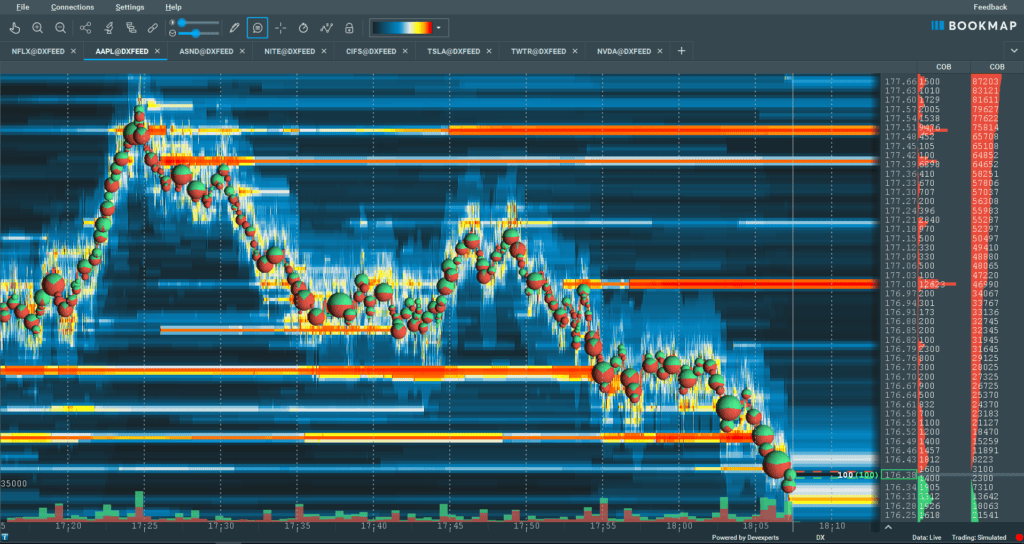
Popular platforms for active day traders include Think or Swim, Interactive Brokers Trader Workstation, and specialized platforms like Bookmap or Jigsaw.
Charting and Technical Analysis
Day traders rely heavily on technical analysis—studying price charts and patterns to predict future movements. Your platform should offer:
- Multiple timeframes (1-minute, 5-minute, 15-minute charts)
- Technical indicators (moving averages, RSI, MACD, volume)
- Drawing tools for support and resistance levels
- The ability to scan for stocks meeting specific criteria
Many traders supplement their platform’s charting with specialized services like TradingView or TC2000.

Market Scanners
Scanners help you identify trading opportunities by filtering thousands of stocks based on criteria you specify (price movement, volume, patterns, etc.). Without a good scanner, you’d be looking for needles in a haystack.
News Feeds
Access to real-time news is critical. Services like Benzinga Pro or Trade The News provide breaking news faster than free sources, giving you an edge when trading around news events.
Your Computer Setup
Day trading is demanding on your hardware. Most successful day traders use:
- Multiple monitors (typically 3-6 screens)
- A fast, reliable computer with adequate RAM
- A backup internet connection
- Uninterruptible power supply (UPS)
Technology failures can be costly, so redundancy matters.
Costs and Taxes: The Financial Reality
Day trading comes with significant costs beyond the obvious risk of losing money on trades.
Commission and Fees
While many brokers now offer commission-free stock trading, day traders typically pay higher fees because:
- Active traders often exceed free trade limits
- Professional platforms charge subscription fees
- ECN fees apply for adding/removing liquidity
- Data feed subscriptions cost money
- Margin interest on borrowed funds
A day trader making 20 trades per day could pay hundreds or thousands of dollars per month in platform fees, data costs, and other charges. You need to factor these costs into your break-even calculation.
The Wash Sale Rule
Day traders need to understand the wash sale rule, which can complicate your taxes significantly.
According to the IRS, a wash sale occurs when you sell or trade securities at a loss and within 30 days before or after the sale you buy substantially identical securities, acquire substantially identical securities in a fully taxable trade, or acquire a contract or option to buy substantially identical securities.
When a wash sale occurs, you cannot deduct the loss for tax purposes. Instead, the disallowed loss is added to the cost basis of the new securities you purchased. This effectively postpones the loss deduction until you sell the new securities.
For day traders who frequently buy and sell the same stocks, wash sales can happen constantly, making it difficult to realize tax losses during the year. This is one reason many active traders elect to use “mark-to-market” accounting (discussed below).
Tax Treatment: Trader Tax Status
Most day traders are classified by the IRS as “investors,” meaning their gains and losses are treated as capital gains or losses. However, if you qualify as a “trader in securities,” you may be eligible for different tax treatment, including:
- Deducting trading expenses as business expenses
- Avoiding the $3,000 annual limit on capital loss deductions
- Potentially electing mark-to-market accounting (Section 475(f))
To qualify as a trader rather than an investor, you must:
- Trade substantially, regularly, frequently, and continuously
- Seek to profit from short-term market movements
- Spend a substantial amount of time on trading activities
Mark-to-market accounting allows you to treat all your gains and losses as ordinary income or loss, avoiding the wash sale rule and capital loss limitations. However, this election must be made by specific deadlines and has both benefits and drawbacks that require consultation with a tax professional familiar with active trading.
Realistic Cost Calculation
Before you start day trading, calculate your true break-even point. Include:
- Platform and data fees
- Commission costs per trade
- Margin interest
- Your time (opportunity cost)
- Tax implications
Many day traders are shocked to discover how much they need to profit just to break even each month.
Getting Started: A Realistic Roadmap
If you’re still interested in day trading after understanding the risks and requirements, here’s a sensible approach to getting started:
Step 1: Education First
Don’t risk a dollar until you’ve invested time in education. Learn about:
- Technical analysis and chart reading
- Market structure and order types
- Risk management principles
- Trading psychology
- The specific strategies you plan to use
Quality educational resources include books by experienced traders, online courses, and reputable trading communities. Be wary of expensive courses promising quick riches—if someone’s making millions day trading, they don’t need to sell courses.
Step 2: Paper Trading
Most platforms offer paper trading (simulated trading with fake money). Spend several months paper trading to:
- Test your strategies
- Learn your platform’s features
- Develop your routine and process
- Experience the psychological aspects of decision-making
Paper trading isn’t perfect—it doesn’t replicate the emotional pressure of real money—but it’s a valuable learning tool.

Step 3: Start Small
When you’re ready to trade with real money, start with the minimum required capital (and remember, that’s $25,000 if you’re going to be a pattern day trader). Don’t rush to deploy all your capital immediately.
Begin with small position sizes. If you’re trading stocks, start with 100-share lots rather than 1,000-share lots. Get comfortable with the emotional experience of winning and losing real money.
Step 4: Journal Everything
Keep a detailed trading journal documenting:
- Every trade you make (entry, exit, reason, outcome)
- Your emotional state
- Market conditions
- What worked and what didn’t
Review your journal regularly to identify patterns in your trading, both positive and negative. This feedback loop is essential for improvement.
Step 5: Continuous Improvement
Successful day traders never stop learning. Markets evolve, strategies stop working, and new opportunities emerge. Stay engaged with the trading community, continue your education, and adapt your approach based on your results.
Is Day Trading Right for You?
The SEC’s Day-Trading Risk Disclosure Statement (FINRA Rule 2270) emphasizes that day trading generally isn’t appropriate for someone with limited resources, limited investment or trading experience, and low risk tolerance. You should be prepared to lose all of the funds you use for day trading.
Consider these questions honestly:
The SEC’s Day-Trading Risk Disclosure Statement (FINRA Rule 2270) emphasizes that day trading generally isn’t appropriate for someone with limited resources, limited investment or trading experience, and low risk tolerance. You should be prepared to lose all of the funds you use for day trading.
Consider these questions honestly:
Financial Questions:
- Do you have at least $25,000 in risk capital (money you can afford to lose)?
- Can you cover your living expenses from other sources while you learn?
- Do you understand that most day traders lose money?
Time and Commitment Questions:
- Can you dedicate full-time attention to day trading during market hours?
- Are you willing to spend months or years learning before achieving consistent profitability?
- Can you handle the stress of rapid decision-making?

Psychological Questions:
- Can you control your emotions when you’re winning or losing money?
- Are you disciplined enough to follow a trading plan?
- Can you accept losses without tilting or revenge trading?
Knowledge Questions:
- Do you understand technical analysis, market structure, and order execution?
- Have you studied and practiced the strategies you plan to use?
- Do you know the regulatory requirements and tax implications?
If you answered “no” to several of these questions, day trading probably isn’t right for you—at least not yet. There’s no shame in choosing a different path. Long-term investing has created far more wealth for regular people than day trading ever has.
Your Trading Journey Starts with Knowledge
Day trading offers the potential for profits, but it comes with substantial risks and significant regulatory requirements. The pattern day trader rule, the $25,000 minimum equity requirement, and the harsh reality that most day traders lose money aren’t meant to discourage you—they’re meant to help you make an informed decision.
If you decide to pursue day trading, commit to doing it right. Invest in education, start with paper trading, begin with small position sizes, keep detailed records, and never risk money you can’t afford to lose.
Connect with fellow traders who can share insights and experiences. Learn from both successes and failures—yours and others’. Empower your trading skills with the right tools, knowledge, and mindset.
Whether day trading becomes your path or you choose a different approach to the markets, the most important thing is making decisions based on realistic expectations and a solid understanding. Your trading journey begins with education, and this guide is just the first step.
This journey isn’t easy, but it’s very rewarding, and in a strange way, it’s like therapy. It makes you better in every way. You can’t help it, because if you want to succeed, you need to straighten out your act.