
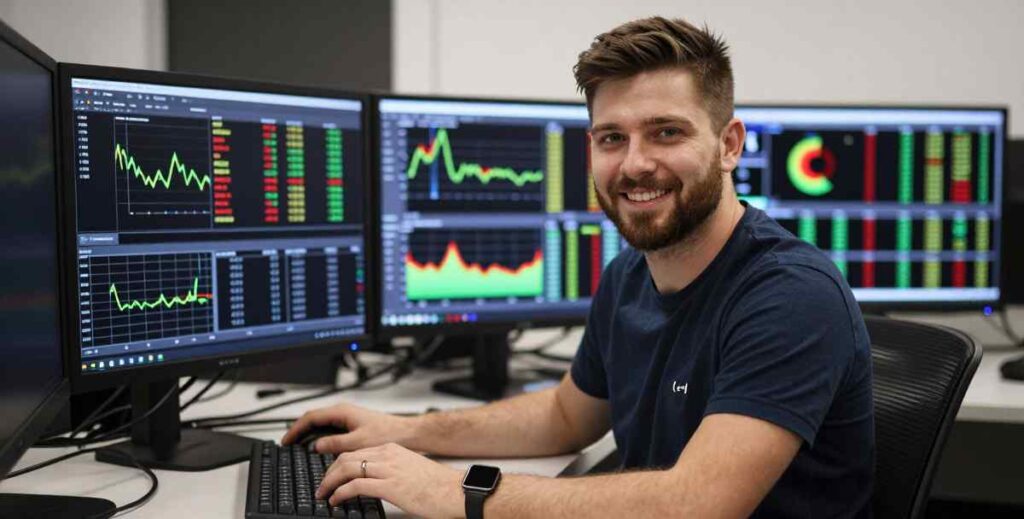

If you’ve only just started your trading journey, you’ll probably already know that the markets can and will test you in ways that go way beyond just your trading strategy. Not only will they test your patience, your discipline, and your mental toughness, but they’ll also test your ability to read people. The charts might show what’s happening with the price, but they also reflect what’s going on in the minds of other traders.
Learning how to control your emotions while day trading is just as important as being able to read a chart or draw a line on a grid. That’s where day trading psychology comes in – it’s all about the importance of discipline, the patterns we fall into as traders, and keeping our emotions in check. We’ve all got to stay disciplined, even when the markets don’t line up with what we think, because the truth is, the markets never do what we think they will.
Let’s take a closer look at the most common emotions faced by day traders, and explore some practical tips for staying on track.
The Rush Before the Bell
You know that rush of adrenaline just before the market opens? Every trader experiences that at some point. But for trading success to happen, you need to have a balanced perspective.
Passion is a good thing, but it can quickly cloud your judgement. High energy often leads to impulsive decisions right from the start.
Emotions like excitement and anxiety can really get in the way of traders making good decisions at the market open, making it easy to stray from your plan if you’re not ready.
So build yourself a decent morning routine. Get up a bit earlier than normal, run through your trading plan, and take a few deep breaths before the bell goes.
Get your head straight. A lot of traders meditate before they start trading. Practicing mindfulness can really help you keep your cool during market volatility and prevent burnout.
You want to walk into the market with a clear head, not your heart pounding in your chest. That way, you can make rational decisions.
The FOMO (Fear of Missing Out)
You see a stock taking off like a rocket, and everyone on social media is getting excited. Your gut’s telling you to jump in before it goes any higher. But emotional biases like loss aversion and overconfidence are what get in the way of good judgment and lead you to make impulsive trades.

That’s FOMO, and it’s a big destroyer of trading accounts.
It’s going to make you throw your plan out the window and start acting on gut instinct – which is just asking for trouble. And that’s when fear and greed really start to take over and make impulsive decisions even more likely.
Buying at the top of a strong uptrend is basically just asking for trouble.
Instead of chasing something that’s already happened, accept that you’ve missed the boat. There will be lots of new opportunities coming up tomorrow. Wait for the setups that play to your strengths.
The Fear of Losing
Nobody likes seeing red on their screen. But if you’re too scared of losing money, you’ll be too nervous to take good trades. You might even freeze up when a trade starts going the wrong way, and hope it will come back around.
Losses are just the cost of doing business in trading. The best way to overcome this fear is by using proper risk management. Limit your exposure to any one trade – like only risking 1 or 2% of your total capital on any one position. That way, when you do lose, it’s just a small scratch rather than a massive hole in your account.
What keeps traders in control is sticking to a solid trading plan. Traders often have a thing called loss aversion – where the fear of losing out weighs up the potential for gains – and that can really impact their decision making. Following your plan and managing risk properly will stop you from blowing it all up.
Greed and Holding On Too Long
Have you ever seen a trade make a nice profit, but you held on too long because you thought it could go even higher? only to see it start going the wrong way? A lot of traders struggle with this one.
Greed makes us forget that closing a trade is the only time we actually make money. Write that into your trading plan. To stop this from happening, you need to pay yourself when the market gives you the chance. Set a clear profit target before you enter a trade. And make sure you’ve got clear entry and exit rules as part of your trading plan – that way you can stick to your plan and avoid reacting to market movements with your emotions. When the price hits your target, take the money off the table.

If you get a gut feeling, check your plan under ‘gut feeling’ – or better still, write down your losing trades.
Impatience and Overtrading
Sometimes it’s hard to stick to a plan, especially when you see the market moving fast. But impatience can lead to overtrading, and that’s a real danger sign. When you overtrade, you’re basically just piling on losses and going to the wall.
Impatience is something that we all have to deal with – but you can keep it in check by following your plan and sticking to your strategy. If you do end up making some bad trades, just accept that they’ve happened and move on.
You sit at your desk, staring blankly at the screen for two hours – and nothing, absolutely nothing, seems to be falling into place. You feel bored out of your mind & really want to just start clicking buttons, so you go ahead & force a trade on a mediocre setup just for the sake of doing something. I mean, after all, we’re here to make money, right?
Impatience & emotional factors can pretty quickly turn your good intentions into sub-par decision-making, causing you to act on a whim rather than sticking to your trading strategy.
Impatience will, without a doubt, cut your trading account into pieces. If your strategy isn’t sitting pretty, then don’t make the trade. The pressure to make quick decisions in trading is a real killer, and it can easily trigger all sorts of emotional responses – leading you to leap into things without doing the proper analysis. We need to stick with the plan & avoid taking on too much risk. If you’re feeling bored with your trading style, then maybe it’s time to try something different.
I personally switched to scalping, but not all markets are well-suited for that kind of high-frequency trading.
Sitting on your hands is an active trading decision. Protecting your capital is just as important as trying to grow it. If your setup just isn’t there, don’t even think about making a trade.
Self-Doubt After a Few Losses
Taking a couple of losses in a row can be a real confidence killer. You start questioning your strategy, and that’s where you should be careful – you get into trouble. One common emotional response to losses is revenge trading – you start making impulsive trades in an attempt to quickly recoup your losses. That usually comes from a mix of anger & frustration after a loss, and it’s a surefire way to make some really rash decisions in the hopes of winning back the money fast. You start tweaking your strategy, and if you keep doing that, you’ll never get a good read on your strategy, so you’ll never know how to improve.
When self-doubt starts creeping in, take a step back & audit your behaviour. Did you stick to your rules, or were you trading on a whim? If you did stick to your rules, then just accept that losing streaks are going to happen to anyone. get away from the screen, take a walk & recharge. Don’t make a trade when you’re feeling mentally drained.
Sticking to your plan & managing your emotions is what’s going to save you. Have the discipline to do 50 trades & record the data. If at that point you see a pattern or a problem, then you can deal with it.
Regret for Not Following Your Plan
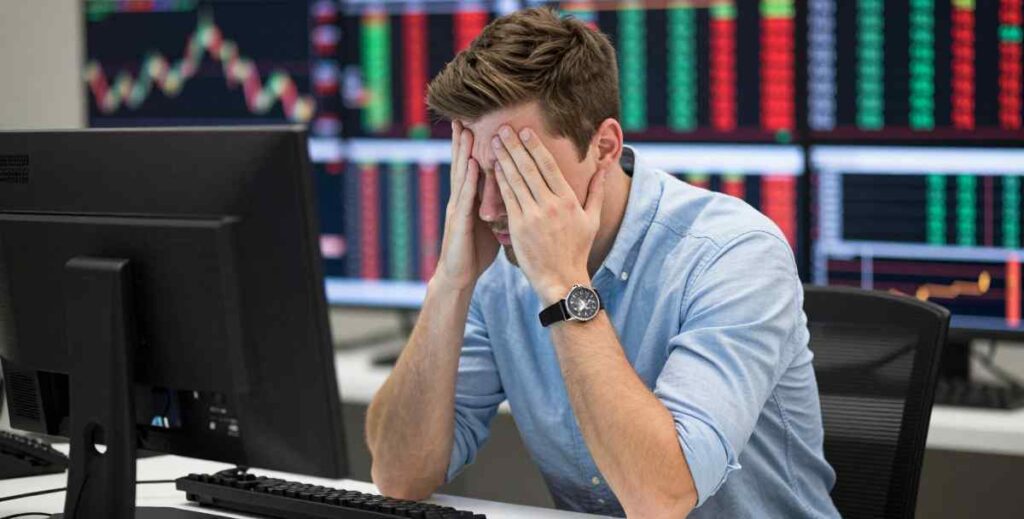
There’s a special kind of pain that comes from taking a huge loss because you broke your own rules. You’re staring at the screen, asking yourself, “Why on earth did I do that?” More often than not, it happens right after you hit the button. If it’s not part of your trading strategy, then just close the trade. You have to keep your discipline up.
Regret is tough to deal with, but dwelling on it isn’t going to magically make your money come back. Use that regret as a learning tool. Write down the mistake in detail & explain exactly why you broke the rule & how it made you feel. Connecting the action with the negative emotion will help you stick to your plan next time you feel tempted to deviate from it. Keeping a trading journal is a big help in understanding your own behaviour & identifying emotional triggers that make you take impulsive decisions. Tracking your behavioural compliance in your journal is key to measuring real change in your trading habits.
Every trader has, at some point or another, tossed their plan aside & tried to wing it – it’s just a natural part of the learning process. We all want to win, but that desire can lead to impulsive decisions.
Managing Cognitive Biases
Cognitive biases are the invisible saboteurs of trading decisions. Even the most experienced traders can fall victim to confirmation bias – where you seek out information that supports your own views & ignore anything that suggests otherwise.
That can lead to impulsive behaviour, excessive risks & missed opportunities for profitable trading.
To manage cognitive biases, try to make your decision-making process as objective as possible.

Don’t just go by your gut feeling or a single source of information – do a thorough analysis using technical indicators & historical data to back up your trading decisions.
That way, you’re making informed decisions based on facts, not just emotions or market noise.
Another powerful tool is joining a trading community. Getting involved with other traders & discussing your trading plan can help you spot confirmation bias & other cognitive traps.
Other traders can offer a fresh perspective & challenge your assumptions, making it easier to identify patterns of impulsive behaviour or flawed reasoning.
By being aware of cognitive biases & actively working to manage them, you’ll reduce the likelihood of making rash decisions & taking unnecessary risks. The more you practice rational decision-making & seek out diverse viewpoints, the more consistent & profitable your trading will become.
Emotional Detachment and Trading
Emotional detachment is one of the most valuable skills you can develop in trading psychology. In the fast-moving world of financial markets, emotional responses like fear, greed, or frustration can cloud your judgement & lead to impulsive decisions. When market fluctuations trigger strong feelings, it’s easy to abandon your predetermined strategy & make suboptimal decisions that can hurt your long-term success. To build some distance between your emotions and your trading, think about how to limit the potential damage of a losing trade. Position sizing & stop-loss orders are usually pretty effective tools to help manage risk & which help take the edge off when you’re worried about a trade. When you know your losses are capped, it’s way easier to keep a level head even when the market is getting crazy.
Keeping a trading journal can be a real game-changer, too. By writing down your trades & your feelings about them, you can start to see patterns in your decision-making patterns – and work on changing the ones that are driving you crazy. This sort of self-awareness helps you make more even-headed decisions & avoid acting impulsively.
Emotional detachment isn’t about ignoring how you feel – it’s about being aware of your emotions, but not letting them rule your actions. Be disciplined and stick to a plan based on facts, not feelings, and you’ll be way better equipped to handle whatever the market throws at you & get long-term success in trading.

Final Thoughts: Trading Psychology and Your Emotions Are Part of the Trade
Trading psychology & managing your emotions is definitely part of trading
Here are the main points from this piece on emotions in day trading: Trying to set realistic expectations for yourself is key to making it in the long run, because it helps you cope with losses, stay away from bad decisions, and keep your cool over the long term. To adapt to changing market conditions, keep learning & keep getting better at what you do – different market conditions need different strategies & a different mental approach. To consistently make money, you need to be disciplined, make your own decisions, & avoid getting caught up in following the herd.
Emotional control isn’t something you develop overnight. It’s a skill you work on every trading session. The people who do this for a living aren’t usually smarter than the rest of us – they just know how to separate their emotions from their trading decisions.
Try keeping a trading journal. Write down not just what trades you made, but how you felt while you were making them. Boredom is a major killer for me – and it’s sneaky.
Also, set a daily loss limit and actually stick to it. Mine is $500 – & if I hit that, my broker shuts me down for the day.
It’s not about eliminating emotions. It’s about being aware of them, recognising what you’re feeling, & deciding whether you want to let it run the show or not.